SORCE partners with leaders who understand that sustainable performance depends on human energy, not just output. Our work develops energetic literacy inside organizations using HRV insight, nervous system science, and leadership development.
This is not a quick intervention.
It is a shift in how leaders understand capacity, resilience, and performance.
If that shift is relevant to your organization, we begin with listening.
Each partnership is designed around the specific conditions and ambitions of the organization typically beginning in four areas.
Diagnostics & Analysis
A comprehensive evaluation of your organization’s energetic health, uncovering key opportunities to restore capacity and enhance team dynamics.
Tailored Programming
Interactive sessions that explore practical tools and strategies for regulating stress, renewing energy, and fostering collaborative environments.
Leadership Development
1-1 coaching tailored to equip leaders with the skills to navigate stress, model resilience, and inspire high-performing teams.
Team Coaching
Group coaching informed by insights from data, creating alignment between individual goals and team performance while fostering a healthy company culture.
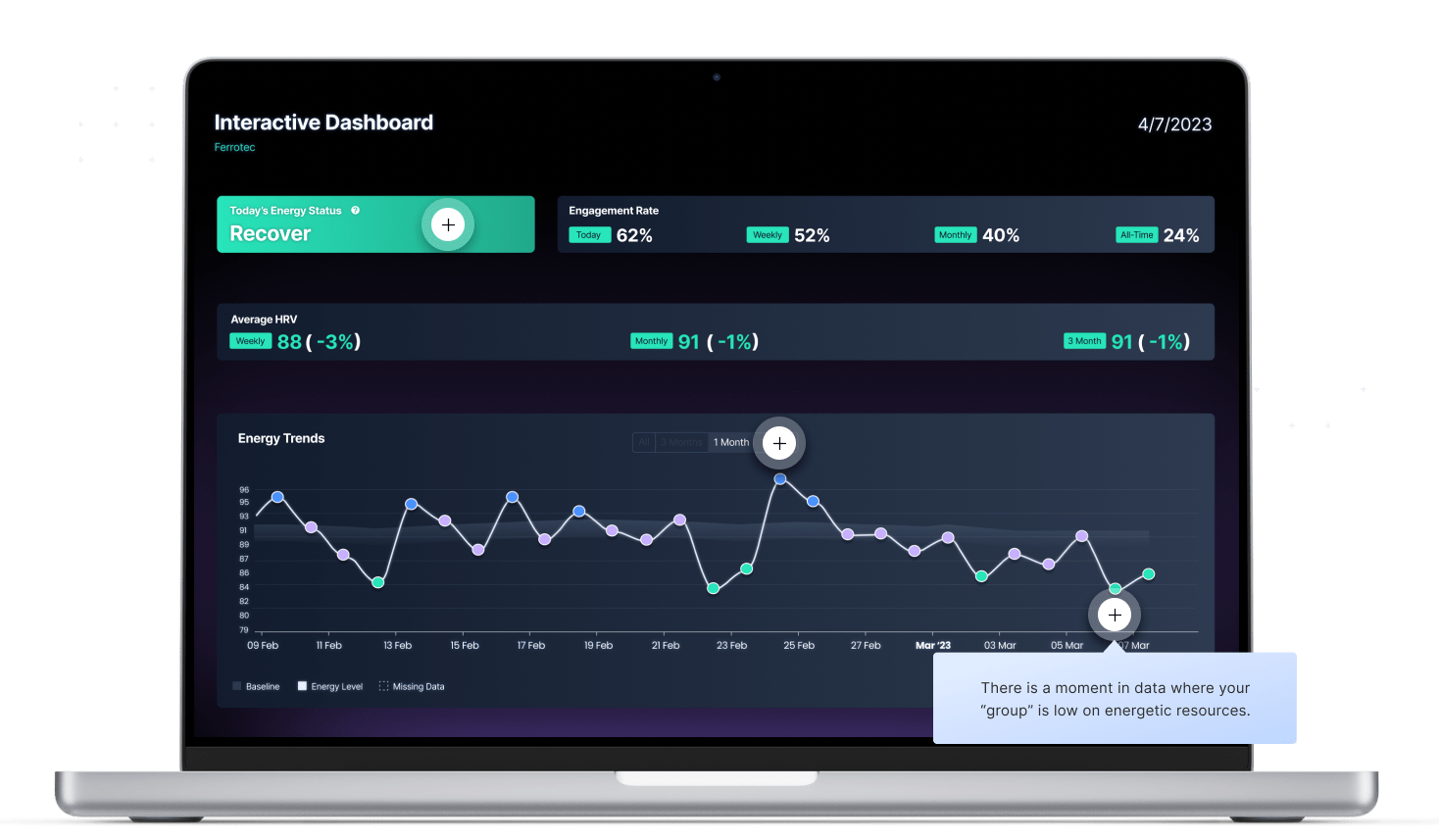
Real-Time Dashboards to Show Anonymized Group HRV
Understand Your Team’s True Capacity
By becoming more energetically literate, individuals, teams, and organizations can:
Prevent burnout before it happens by identifying rising allostatic load early.
Improve clarity and decision making by stabilizing nervous system capacity..
Increase psychological safety by developing emotional and energetic awareness across teams.